By 2030, 4 million workers in Germany will retire*. By 2036, according to the German Economic Institute, that number will reach around 16 million. A large share of them are baby boomers who have worked in production, logistics, and technical service for decades. Their labor can be replaced somehow. What cannot be replaced is what sits in their heads. Experiential knowledge disappears silently. And it costs more than most companies realize.
Knowledge Loss Through the Retirement Wave: What It Really Costs Companies
The costs HR departments know about are the visible ones: recruiting, onboarding, lost productivity during the ramp-up period. The Gallup Engagement Index Germany puts turnover costs at an average of 43,000 euros** per departing skilled worker. That alone is painful enough.
What hardly anyone factors in are the hidden costs of knowledge loss. Studies estimate the total additional cost per departing employee at up to 430,000 US dollars***, on top of recruiting expenses. The European Commission estimates the economic damage from unsecured knowledge at several billion euros per year. These numbers sound abstract. They become concrete as soon as you look at where the money actually drains away.
Where Companies Burn Money Without Noticing
Knowledge loss is not a one-time event. It creates ongoing costs that never show up as such on any profit and loss statement.
Duplicated work and repeated mistakes: Problems an experienced colleague could solve blindly now have to be worked out and solved laboriously by their successors. The same mistakes happen again. The same detours get taken. This costs time, materials, and in the worst case, safety.
The informal help desk: Employees spend an average of 14 hours per week helping colleagues with questions or searching for information themselves. When the person who has answered those questions for years retires, that burden spreads to everyone else, or simply goes unanswered.
Extended ramp-up times: A new skilled worker needs up to twelve months to be fully up to speed. Without structured knowledge they can draw on, it takes even longer. Every month without full productivity is a direct cost factor.
Tribal knowledge that is simply gone: The most dangerous knowledge is the kind no one ever documented because it seemed obvious. Why does machine 3 run better if you start it ten minutes earlier in the morning? Why buy from supplier B when supplier A would be cheaper? This implicit experiential knowledge exists only in people's heads and ultimately retires along with them.
Why the Usual Approaches to Knowledge Transfer Fail
Almost every company has an answer to the problem. Most answers come too late, take too much effort, or simply go unused.
The exit interview: A conversation shortly before the last working day, in which someone documents in two hours what they built over twenty years. At best, the result is a summary, never the actual knowledge.
The process manual: 50 pages no one reads because they are too abstract to help in a concrete situation. And that are already outdated six months after completion, because no one updates them.
The informal handover: Two weeks shoulder to shoulder, then the senior employee is gone. What gets passed on depends on what the person considers important and what they can even show in that time. Most of it stays unspoken.
Just under 60 percent of the companies surveyed see knowledge loss as one of the biggest risks, but only 15 percent have a structured process to deal with it. The gap between awareness of the problem and action is the real problem.
Securing Experiential Knowledge Before It Leaves the Company
The decisive difference is not the tool, but the timing. Knowledge transfer has to start while the skilled worker is still there, not once their retirement date is already set.
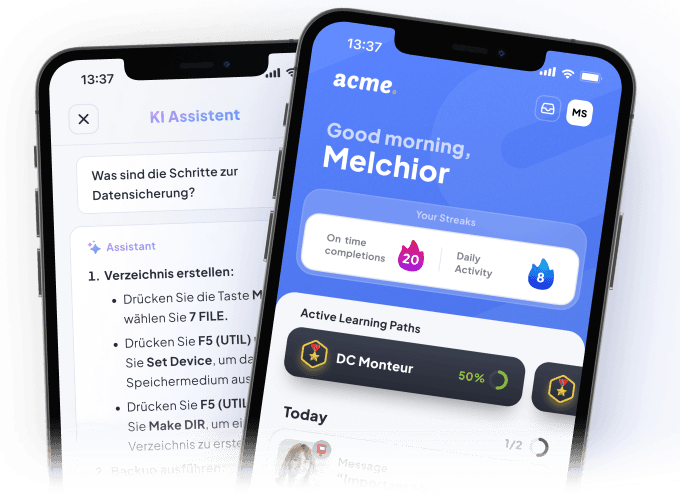
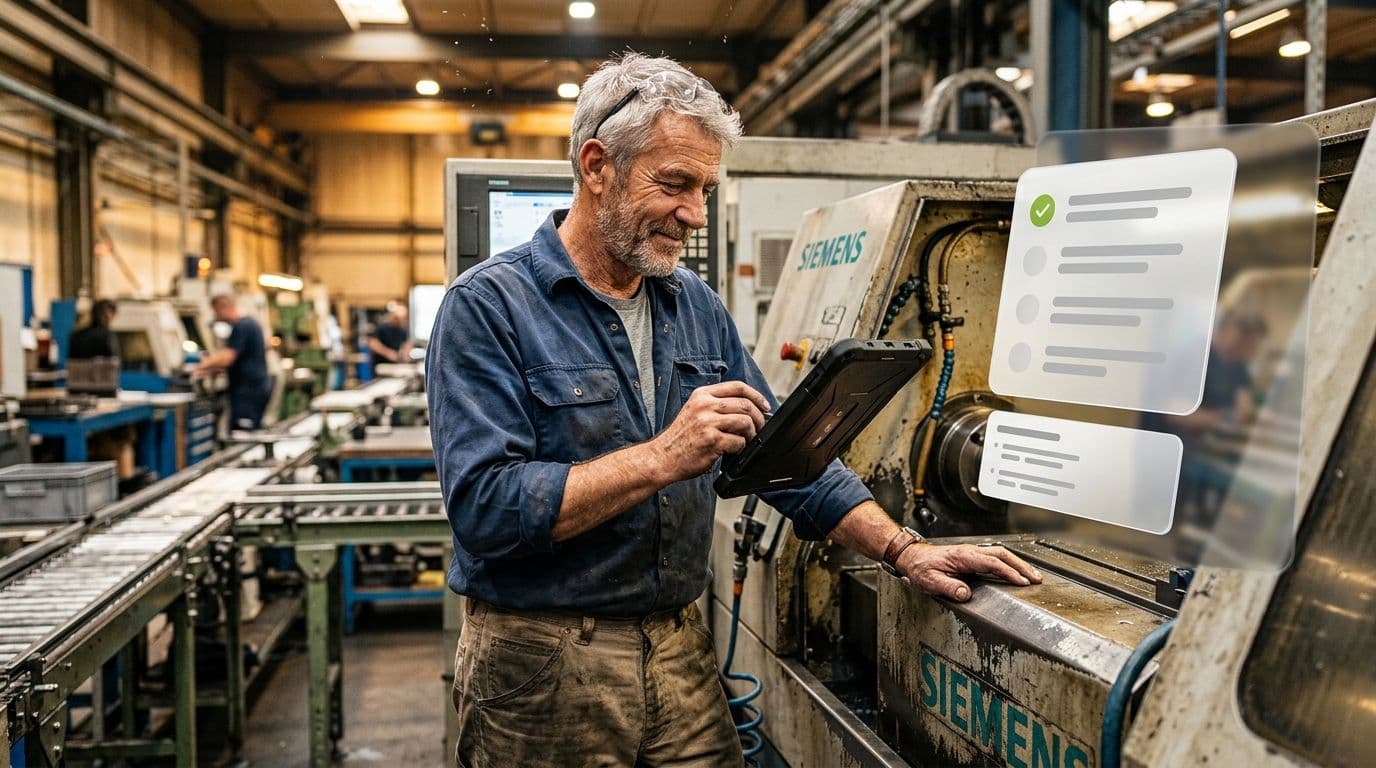
In concrete terms: knowledge has to be pulled out of people's heads before it is too late. Not through elaborate documentation projects that no one sees through, but through structured formats that put experts at the center. A guided knowledge interview in which someone explains a process in ten minutes that they have mastered blindly for years. A POV recording right at the workplace that shows how a machine is serviced instead of describing it. AI that automatically turns this into a structured learning module the successor actually uses. This is not a digitalization project, it is a different way of handling the most valuable capital a company has: the knowledge of its most experienced employees.
Preventing Brain Drain From Demographic Change: How L&D Teams Should Respond Now
1. Identify knowledge holders before they announce they are leaving
Which people in the company hold knowledge that is documented nowhere and will retire within the next two to five years? This question should not wait until retirement is imminent. A simple knowledge holder map is the first step toward robust knowledge management.
2. Understand knowledge transfer as an ongoing process, not a one-time event
Knowledge transfer in a company does not work as a project you set up shortly before retirement. It works as a continuous practice: regular short knowledge interviews, documented problem solutions, shared experiences after completed projects. What is built up small and iteratively also survives demographic change.
3. Make implicit knowledge visible
The knowledge that is hardest to secure is the knowledge experts themselves no longer perceive as knowledge, because it has long been second nature to them. Structured interviews with targeted questions, POV recordings right in the work context, and guided process documentation help bring exactly this tribal knowledge to light.
4. Prepare content so it actually gets used
Knowledge sitting in a SharePoint folder no one can find is not secured knowledge. It has to be searchable, retrievable in context, and in a format that helps people in a concrete situation. Short, visual, available on a smartphone. That is the standard knowledge management has to be measured against today.
Conclusion: The Retirement Wave Will Not Wait for a Structured Process
59 percent of people over 55 in manufacturing and retail will retire within the next five years*****. This is not an abstract future scenario, it is the current staffing plan of many companies.
Whoever starts now to secure this generation's knowledge still has the chance. Whoever waits until the desk is empty pays twice: once for the replacement, once for everything that left with the person.
*German Economic Institute (IW): current study on demographic change in the labor market. **Gallup Engagement Index Germany 2023 ***Inkubit study, September 2025 ****/*****Flip / Workplace Intelligence study "Skills Shortage and AI," January 2025