What is microlearning?
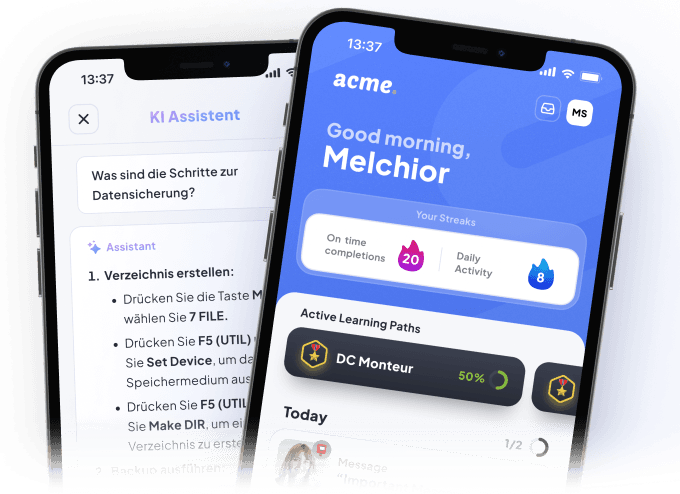
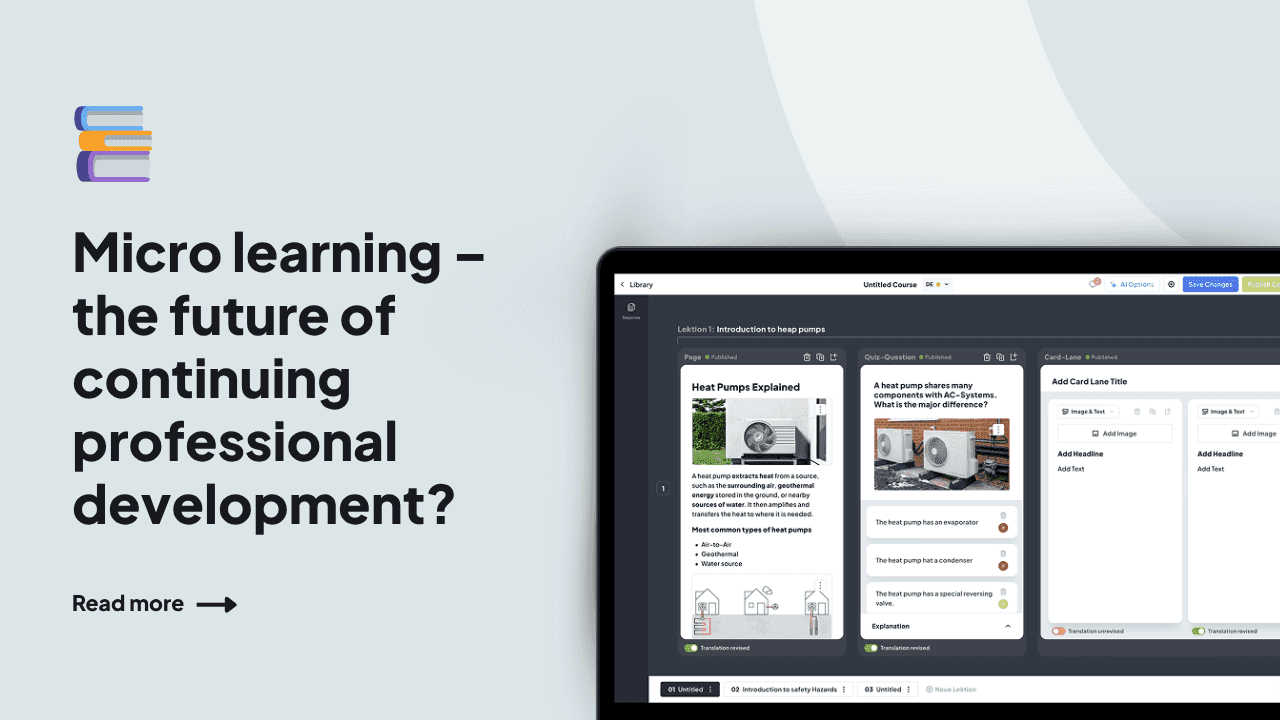
Microlearning divides educational content into compact units typically lasting 3-10 minutes, each targeting a specific learning objective. This approach enables flexible, independent knowledge acquisition.
Generational change and changing learning habits
Research by Hermann Ebbinghaus on the "forgetting curve" demonstrates that regular, short repetitions are essential for sustainable learning. Microlearning implements this principle effectively, aligning with how people now process information through digital media.
Declining attention span — myth or reality?
While studies claim attention spans have shortened, microlearning addresses observed behavioral changes by offering:
- Focused learning units matching natural attention cycles
- Multimedia and interactive elements
- Quick wins that boost motivation
- AI-driven personalization tailored to individual needs
Advantages of microlearning in a corporate context
Integration into everyday working life. The LinkedIn Workplace Learning Report identifies time scarcity as the primary barrier to professional development. Microlearning integrates seamlessly into daily workflows through mobile apps and AI-assisted systems.
Effective learning through regular repetition. Ebbinghaus's "spacing effect" confirms that distributed learning in shorter intervals improves long-term retention versus intensive training sessions.
Motivation through gamification. Gamification principles boost engagement via point systems, competitions, and interactive quiz formats.
Flexibility and personalization. The Journal of Applied Psychology emphasizes that personalized learning approaches increase learning success. AI platforms customize content and adaptively adjust material based on employee knowledge and progress.
Micro learning in practice: Target group-specific applications
Contrary to assumptions, research confirms microlearning effectiveness across all organizational levels and hierarchies.
Operational employees:
- Practical work-step instructions
- Safety and compliance training
- Visual quality standard lessons
- Mobile workplace learning
Administrative employees:
- Process knowledge updates
- Software tutorial modules
- Digestible compliance training
Managers:
- Leadership skill refreshers
- Management trend updates
- Just-in-time pre-task learning
Micro learning as part of a modern learning mix
Not all content suits microlearning formats. The Journal of Educational Research Review demonstrates that combined learning approaches outperform single-method instruction.
Microlearning works best for:
- Knowledge refreshers
- Quick-to-acquire skills
- Process knowledge and best practices
- Compliance updates
Face-to-face training suits:
- Complex concepts
- Soft skills and behavior change
- Team building and networking
- In-depth specialist knowledge
Conclusion
Microlearning represents a scientifically sound, practical corporate training tool. Integrating AI, gamification, and adaptive learning enhances efficiency while meeting diverse employee needs.